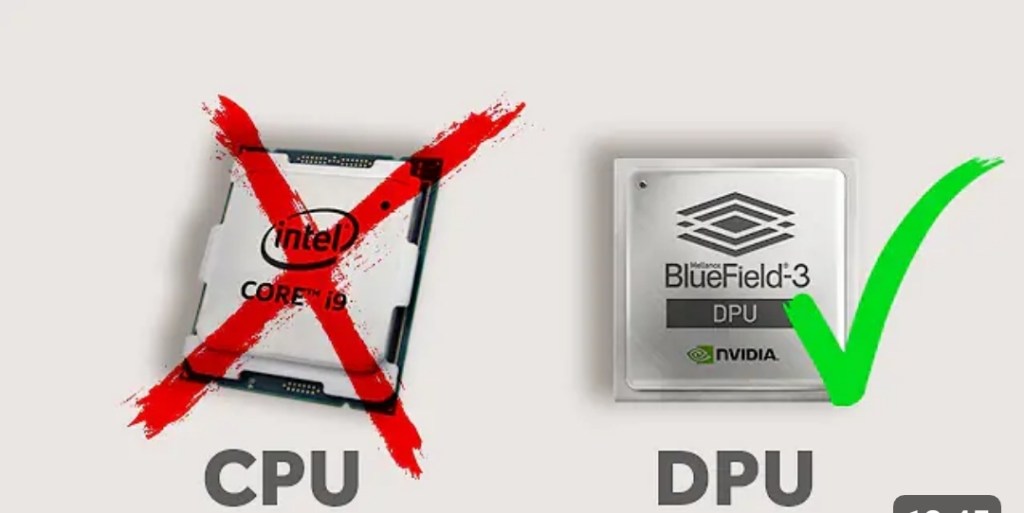
In the ever-evolving landscape of technology, the demand for faster and more efficient data processing has become a driving force. Enter DPUs, or Data Processing Units, the innovative hardware that promises to revolutionize the way we handle data-intensive tasks. In this blog, we’ll explore how DPUs can enhance efficiency and accelerate data processing, ushering in a new era of computing capabilities.
Understanding DPUs: A Paradigm Shift in Data Processing
At its core, a DPU is a specialized processing unit designed to tackle specific workloads, freeing up general-purpose CPUs for other tasks. By offloading tasks like networking, security, storage, and even AI inferencing, DPUs allow for optimized resource allocation and streamlined data flow. This specialization results in quicker data processing, reduced latency, and improved overall system efficiency.
Enhanced Efficiency Through Parallelism
One of the key reasons why DPUs are so effective is their ability to harness the power of parallelism. Unlike traditional CPUs, which handle tasks sequentially, DPUs can process multiple tasks simultaneously. This parallel processing capability enables swift execution of tasks that would otherwise bottleneck on a conventional CPU, thus significantly boosting efficiency.
Accelerating AI and Machine Learning
In the era of artificial intelligence and machine learning, DPUs play a pivotal role in accelerating model training and inference. These tasks often involve immense amounts of data and complex calculations, making them time-consuming on standard CPUs. DPUs, equipped with optimized architectures for matrix operations and neural network computations, excel in handling these workloads efficiently. As a result, organizations can achieve faster insights, better decision-making, and enhanced productivity.
Optimized Data Center Operations
In data centers, where efficiency is paramount, DPUs shine by offering optimized networking and security functions. DPUs can handle tasks like packet processing, encryption, and firewalling, offloading these responsibilities from CPUs. This not only boosts network performance but also ensures that the CPU’s resources are directed towards critical tasks, further enhancing overall system efficiency.
Seamless Integration into Existing Systems
DPUs are designed with compatibility in mind. They can be integrated into existing infrastructures, allowing organizations to leverage their benefits without major overhauls. This adaptability ensures that the transition to DPUs is relatively smooth, leading to quicker adoption and realization of efficiency gains.
Future Implications and Innovations
The rise of DPUs marks a significant milestone in the evolution of computing. As technology continues to advance, DPUs are likely to become more sophisticated, capable of handling an even broader range of tasks. This evolution could lead to a future where data-intensive operations are streamlined, AI applications are more accessible, and computing resources are utilized more efficiently than ever before.
Conclusion
The Data Processing Unit is a game-changer that promises to redefine how we approach data-intensive tasks. By leveraging parallel processing, specialization, and optimization, DPUs enhance efficiency and accelerate data processing, leading to improved system performance across various applications. As organizations continue to embrace these innovative units, the era of faster, more efficient computing is well within reach. The journey towards unlocking unprecedented efficiency has begun, thanks to the power of DPUs.
 TECH INSIGHTS
Leave a comment